Page 4.
|
|
Geometrical numerology and figurative geometry of words. Information of this page can be interesting to people who are interested in mystical theories of occultism and theosophy, and also consider the occult doctrine of Cabbala or Kabala as a highest divine knowledge. As actually divine knowledge or universal wisdom, and in particular esoteric concepts of gematria or otherwise to tell sacral figurative geometry of human speech and languages are more complex, rather than in Cabbalistic books. |
-
The gematria is Cabbalistic or Kabalistic term which is known in Cabbala or
Kabala and means figurative geometrical perception of alphabetic letters and
sounds of speech. Namely phonetic parameters of sounds and graphic outlines of
letters according to concepts of Cabbalistic gematria are connected with
figurative geometrical images in which supernatural mystical senses are ciphered.
It is possible to tell that according to esoteric concepts of gematria in the
context of Cabbala graphical forms of alphabetic symbols or characters are
considered as mystical geometrical images according to which sounds of speech or
phonemes of language possess not only acoustic parameters, but also are carriers
of metalinguistic information.
Only characters of alphabets and sounds of speech possess supernatural mystical
senses according to esoteric concepts of Cabbala. But words too can be perceived
as figurative geometrical images as letters in words from the view point of
numerology have numerical values which can be considered as spatial coordinates.
Namely numerical values of letters can be considered as parameters of
geometrical positions according to which words form spatial figures and images,
and differently to tell semantic visual shapes of figurative geometry or sacral
gematria of human speech.
For this purpose it is necessary to use the numerical square which is described
below on this web page. And also it is necessary to use alphabetic numerical
matrixes according to which letters correspond with numbers in numerology. In
particular for letters and words of Russian language it is necessary to use
duodecimal numerical matrix which is shown in the table.
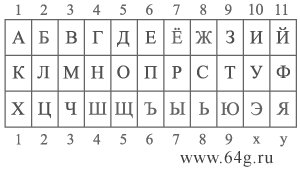 |
The shown numerical matrix corresponds to duodecimal
system of mathematical notation and letters of contemporary Russian
alphabet as there are 33 cells which are necessary for arrangements of
33 alphabetic symbols or characters. And also there are 11 verticals for
11 ciphers of duodecimal mathematical notation and 3 horizontals which
correspond to units, dozens and grosses. Top horizontal - units. Middle horizontal - dozens (1 dozen = 12 units). Bottom horizontal - grosses (1 gross = 12 dozens). Shown duodecimal numerological matrix of the Russian alphabet differs from decimal table of numbers and letters on previous page in this section of website. The duodecimal numerological matrix for phonemes of English language and letters of alphabet is shown on eighth page in this section of website. |
Numbers of decimal mathematical notation from 1 to 11 or otherwise to tell
numerical signs on classical decimal numerology are shown above the table, and
duodecimal ciphers are below designated. Symbols X and Y mean additional
numerical signs or figures which are necessary for duodecimal scale of
mathematical notation.
By means of the shown numerical alphabetic matrix it is possible to calculate
numerological values of letters, and calculations can be executed according to
decimal or duodecimal numbers. For example, the Russian word МИР WORLD consists of three letters
which decimal sum is 3+10+7=20, and duodecimal sum is 3+X+7=18 or otherwise 1
dozen and 8 units. As decimal number 20 consists of 1 dozen and 8 units (20-12=8).
The difference between decimal and duodecimal results of calculations has
essential value as two computing scales are various sets of numbers, or
otherwise to tell 11 and 9 numerical signs in two systems of mathematical
notation have different esoteric or mystical senses from the view point of
numerology. But results of calculations can be correlated to the numerical
square in which decimal numbers can be transformed or converted in duodecimal,
that is shown in the following table.
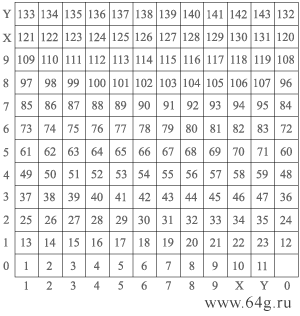 |
Cells of the shown numerical square designate decimal numbers. Vertical and horizontal rows correspond to ciphers of duodecimal scale of mathematical notation, and in particular horizontals correspond to dozens, and verticals to units. Namely decimal numerical signs are written directly in cells, and edges of numerical square show ciphers which form duodecimal numbers. For example, letters of alphabet in the word ГЕОМЕТРИЯ GEOMETRY have decimal numerological sum 4+6+5+3+6+9+7+10+11=61, that differs from calculations in the context of duodecimal notation 4+6+5+3+6+9+7+X+Y=51, but both sums within the numerical square correspond with one cell. Because decimal number 61 (six tens and one unit) corresponds with the cell which is on crossing of fifth horizontal and first vertical, that corresponds to duodecimal number 51 (five dozens and one unit). |
-
Or other example, the word ЗВУК SOUND has decimal numerological sum of
letters 9+3+10+1=23 (two tens and three units), that corresponds to the
duodecimal sum 9+3+X+1=1Y (one dozen and Y units). Or the word АЗБУКА
AZBUKA has decimal sum of letters 1+9+2+10+1+1=24 (two tens and four units),
that corresponds to the duodecimal sum 1+9+2+X+1+1=20 (two dozens).
In any case the decimal and duodecimal sums correspond with identical cells of
numerical square, that allows to represent letters of alphabet as geometrical
images and to see figurative geometry of words, or otherwise to tell Cabbalistic
gematria of human speech and languages from view points of different
mathematical systems. And also it allows to interpret and understand mystical
metalinguistic senses of words according to esoteric values of numbers in the
context of different systems of numerology.
Look information on esoteric mystical values of numbers in the context classical
decimal or otherwise to tell
Pythagorean numerology on pages of other website
numeralgame.64g.ru. And for interpretation and understanding of
esoteric mystical senses of 11 ciphers or figures of duodecimal numerology it is
possible to consider philosophical categories within the metalinguistic triangle
which is shown in limits of this website on the second page in this section.
In particular the right ascending side of metalinguistic triangle has eleven
steps or levels which are comparable to numerical signs of duodecimal numerological system.
First figure - ДУХ SPIRIT (source of all alive and existing or being).
Second figure - СЫН SON (realization of existential beginning of spiritual source).
Third figure - ЧАДО CHILD (actual embodiment of alive essences or creatures).
Fourth figure - СУЩНОСТЬ LIVE SUBSTANCE (alterable vital forms of alive essences).
Fifth figure - ПРЕВРАЩЕНИЕ TRANSFORMATION (modification of live
substances and conversion of physical objects).
Sixth figure - НЕЯВНОЕ IMPLICIT (illusive reality).
Seventh figure - ОДУХОТВОРЕНИЕ ENLIGHTENMENT (overcoming limiting border
between implicit and obvious realities).
Eighth figure - ЯВЬ OBVIOUS (genuine or original reality).
Ninth figure - ВЕЛИЧИЕ GREATNESS (clearing and comprehension of true).
Tenth figure - ЕСТЕСТВО TRUE ESSENCE (realization of spiritual predetermination).
Eleventh figure - ДУША SOUL (absolute life).
The listed philosophical categories or mystical values of numbers correspond
to evolutional stages of human soul development which corresponds with the right
ascending side of metalinguistic triangle, that corresponds to concepts of
transcendental philosophy. But also numerical signs on duodecimal numerology can
be correlated with other sides of metalinguistic triangle in a context of
ordinary routine life or trivial commonplace subsistence. In particular aspects
of ordinary life and commonplace subsistence can be correlated with the left
descending side which displays concepts of idealistic subjective philosophy, or
with the bottom horizontal side which corresponds to concepts of materialistic
or social philosophical systems.
In total by means of the shown numerical square in the context of duodecimal
numerology it is possible to calculate numbers which from the view point of
figurative geometry and Cabbalistic gematria specify metalinguistic
philosophical meanings and mystical senses of any words. But it is necessary to
consider that philosophical meanings and mystical senses or esoteric values are
peculiar only for abstract concepts, or for names and denominations. But if
words designate real subjects or objects then semantic meanings form in
consciousness of people mental associations which are connected with forms or
functional destinations of practical things, that excludes actuality or
otherwise to tell essentiality of philosophical meanings and mystical values
from the view point of gematria and numerology, and also figurative geometry of words.
Besides by means of the shown numerical square in the context of numerology it
is possible to calculate metalinguistic senses of complex word-combinations or
statements and phrases. For this purpose it is necessary to calculate total sums
of numerical values of alphabetic letters in each word within a statement, and
then according to total numbers it is possible to find geometrical positions of
words within the numerical square. And then it is possible to connect total
numbers of words by lines. Namely lines can connect cells of numerical square
where numbers correspond to words and designate geometrical positions according
to which word-combinations form spatial figures, that allows to see linear
images or figurative geometry of statements and phrases, as it shown in the
following chart.
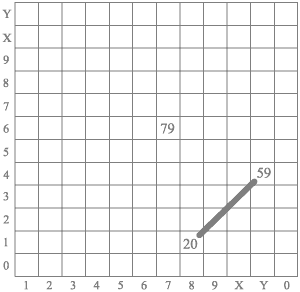 |
The line on the scheme connects cells in which decimal
numbers 20 and 59 correspond with numerological sums of alphabetic
letters in words МИР WORLD and ЧЕЛОВЕЧЕСТВО MANKIND,
namely this line designates geometrical positions of two words within
the numerical square. Decimal numbers 20 and 59 correspond to duodecimal numerical signs 18 and 4Y which correspond to philosophical categories ДУХ SPIRIT plus ЯВЬ OBVIOUS, also СУЩНОСТЬ LIVE SUBSTANCE plus ДУША SOUL. These philosophical categories according to metalinguistic mystical values and esoteric senses of eleven ciphers in the context of duodecimal numerological system can be interpreted as movement of alive substance of mankind to realization of absolute life owing to presence of spirit in the world reality. Or there can be other semantic interpretations which can be connected with various philosophical perspectives and intellectual aspects from view points of which words МИР WORLD and ЧЕЛОВЕЧЕСТВО MANKIND are considered. |
-
In a similar way within the shown numerical square it is possible to
calculate geometrical figures of words and word-combinations, and also it is
possible to consider philosophical meanings and esoteric mystical senses which
correspond to words and numbers in the context of numerology. As a result the
field of numerical square becomes art space where words form geometrical figures
or figurative compositions which are coordinated with numerical mystical values
or otherwise to tell spatial sizes of human speech.
In essence geometrical figures or figurative compositions of words in space of
numerical square can be interesting as graphical illustrations for poetry or
literary texts, and also sacred religious books.
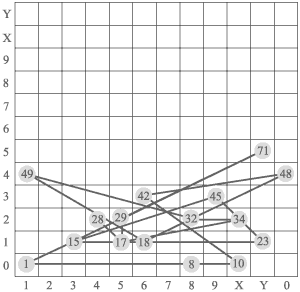
Following three charts show logic algorithm according to which linear
geometrical images of words and figurative compositions of word-combinations can
look like graphical illustrations. As example look images which are formed by
words of 116th psalm of David in Russian and 117th psalm in English versions of
the Bible.
|
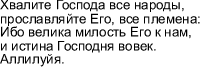
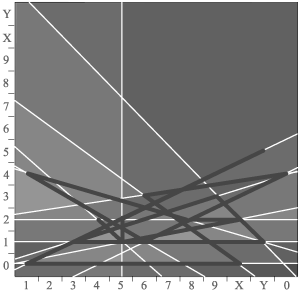
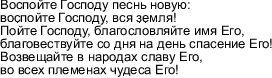
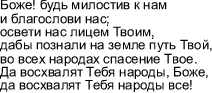
Хвалите (32) Господа (34) все (17) народы (29)
Praise the LORD, all you nations; First chart shows ratios of words with cells of numerical square
according to decimal numerological numbers. And also first chart shows
lines which designate sequence of words within psalm of David. |
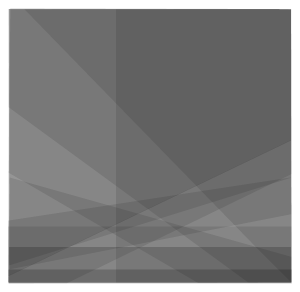
Art principles and algorithms of the shown figurative images can be different.
For example, geometrical ratios of words with numerological numbers in cells of
numerical square can be specified by epicenters of circles within limits of
which grey color increases intensity from centers to periphery in regular
intervals. Or any other art principles and geometrical algorithms can be applied.
Also geometrical figurative images of statements or phrases of human speech in
numerical square can be color, namely can be connected with colour spectral
parameters of alphabetic letters, that is shown in following drawings.
As examples look colour geometrical images or art compositions which are
formed by words of 95th and 18th psalms of tsar David in the Bible.
Colors of words in the shown figurative compositions are determined with vowel
sounds of stressed syllables, namely colour spectral parameters of basic letters
designating key phonemes in words are considered only.
Look detailed information on colour parameters of alphabetic letters on
following page in this section of website.
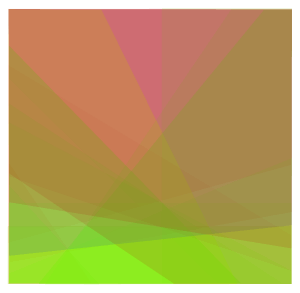 |
Fragment of 95th or 96th psalm in the Russian and English versions of
the Bible. This textual fragment consists of three phrases which are incorporated in one image.
Sing to the LORD a new song; |
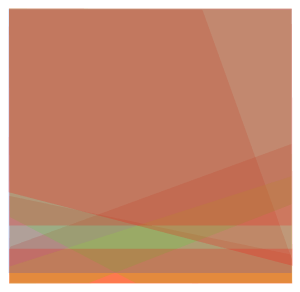 |
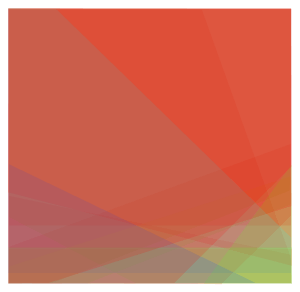
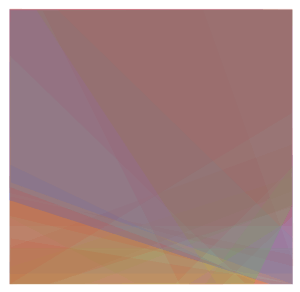
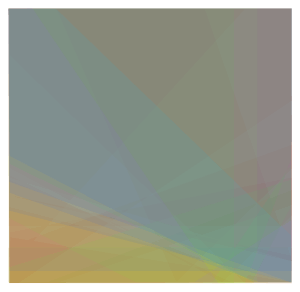
Fragment of 18th in Russian and 19th
psalm in English versions of the Bible. The fragment consists of four phrases which are shown in separate images, but each drawing is continuation of previous. Namely image of following phrase is imposed on drawing of previous.
The heavens declare the glory of God; |
 |
Day after day they pour forth speech; |
 |
There is no speech or language |
 |
Their voice goes out into all the earth, In essence not only phrases but also each word creates graphical multiplication of images, and as a result drawings have modifications as in a cartoon film or video clips. |
Also I bring to your attention figurative geometry of art compositions which are formed of words of 8th and 66th biblical psalms of David.
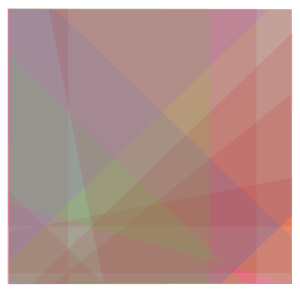 |
Fragment of 8th psalm.
O LORD, our Lord, |
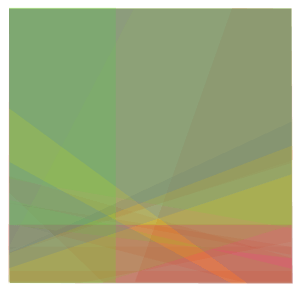 |
Fragment of 66th and 67th psalm in
Russian and English versions of biblical text.
May God be gracious to us and bless us |
Art principles of the shown graphical images can be named as "metalinguistic
suprematism". Because visual suprematism in view of fine arts means combinations
of colors in graphical figures of art space, particularly in suprematic pictures
of painter Malevich. And metalinguistic suprematism are graphical figures
coordinated with colour parameters of alphabetic letters and gematria of
figurative geometry of words.
It is possible to tell that metalinguistic suprematism in the context of fine
arts is aggregate of concepts according to which pictures or drawings can be
considered as visual figures or figurative displays of words in geometrical
space which symbolizes measurements of universe where multivariate spatial sizes
of human speech and languages reveal. And in essence measurements of universe
where numerical values and numerological meanings are connected with visual
perception of mystical occult gematria or sacral figurative geometry of words
and letters of alphabets.
Following page results information about spectral colour parameters of letters, or about conformity of alphabetic characters with colors of iridescent spectrum of rainbow.
Also look on nine pages in this section of website some information about metalinguistic formula and esoteric meanings of Cyrillic letters, words as mantic predictions and duodecimal matrix in numerology, spectral parameters of sounds and numerological numbers of phonemes, numerical values of names and mystical doctrine of Cabbala.